10-Year-Old Pitch Count in Practice: Bullpen & Weekly Limits
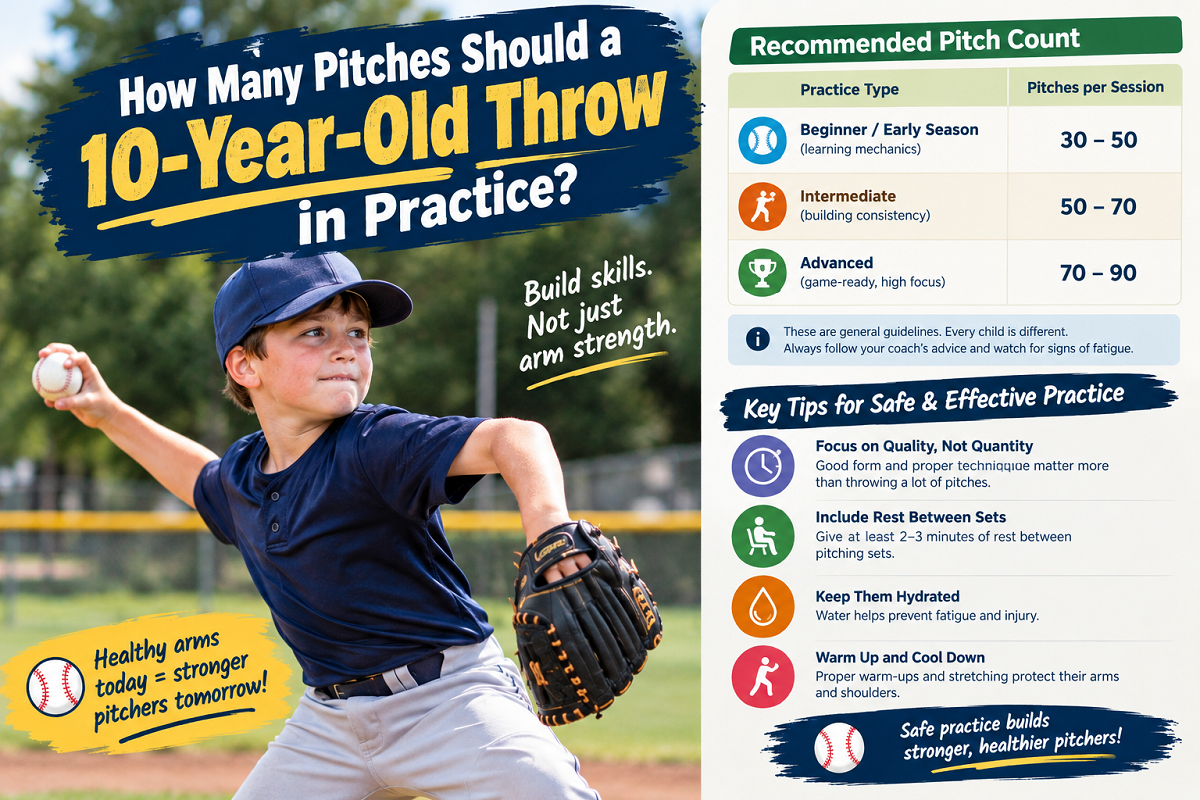
Table of Contents
- How Many Pitches Should a 10-Year-Old Throw in Practice?
- How Many Pitches Per Week Can a 10-Year-Old Throw?
- How Many Days of Rest Does a 10-Year-Old Need After Pitching?
- What Is the Max Pitch Count for a 10-Year-Old?
- How Many Throws a Day Is Too Much for a 10-Year-Old?
- Signs a 10-Year-Old Is Throwing Too Many Pitches
- What Pitches Should a 10-Year-Old Throw in Practice?
- 10-Year-Old Pitching Practice Plans
- How to Track a 10-Year-Old's Pitch Count
- Travel Ball, Tournaments, and Softball Limits
- FAQs
A 10-year-old should throw 20 to 35 pitches in a practice bullpen, 1 or 2 times per week, with at least one day off between sessions. Beginners should stay at 15 to 25 pitches. These are coaching guidelines, not official rules: Little League and MLB's Pitch Smart set limits for games (75 pitches per day at ages 9–10), but nobody sets a hard cap for practice. This guide fills that gap with exact numbers, charts, and plans you can use this week.
How Many Pitches Should a 10-Year-Old Throw in Practice?
A 10-year-old should throw 20 to 35 pitches in a normal practice bullpen. Beginners should throw 15 to 25, and experienced, well-rested pitchers can go up to about 40. Stop the session early if the delivery gets sloppy or the child looks tired.
| Pitcher Type | Pitches Per Practice Bullpen |
| First season pitching | 15–25 |
| 1–2 seasons of experience | 20–35 |
| Experienced, healthy, well rested | 30–40 (hard ceiling) |
| Coming back after time off or soreness | 10–15 easy |
Warm-up throws are not part of these totals, but they still stress the arm, so keep warm-ups short and easy.
How many pitches can a 10-year-old throw in a bullpen?
Most 10-year-olds can safely throw 20 to 35 pitches in one bullpen session, with 40 as an upper limit for experienced pitchers. Quality matters more than volume: end the bullpen when mechanics fade, even if the planned number is not finished.
A bullpen is a planned session at the pitching distance with a catcher. Break it into sets of 8 to 10 pitches with a 1–2 minute break and one coaching cue per set. Ten focused pitches teach more than forty tired ones.
How many pitches should a beginner 10-year-old throw in practice?
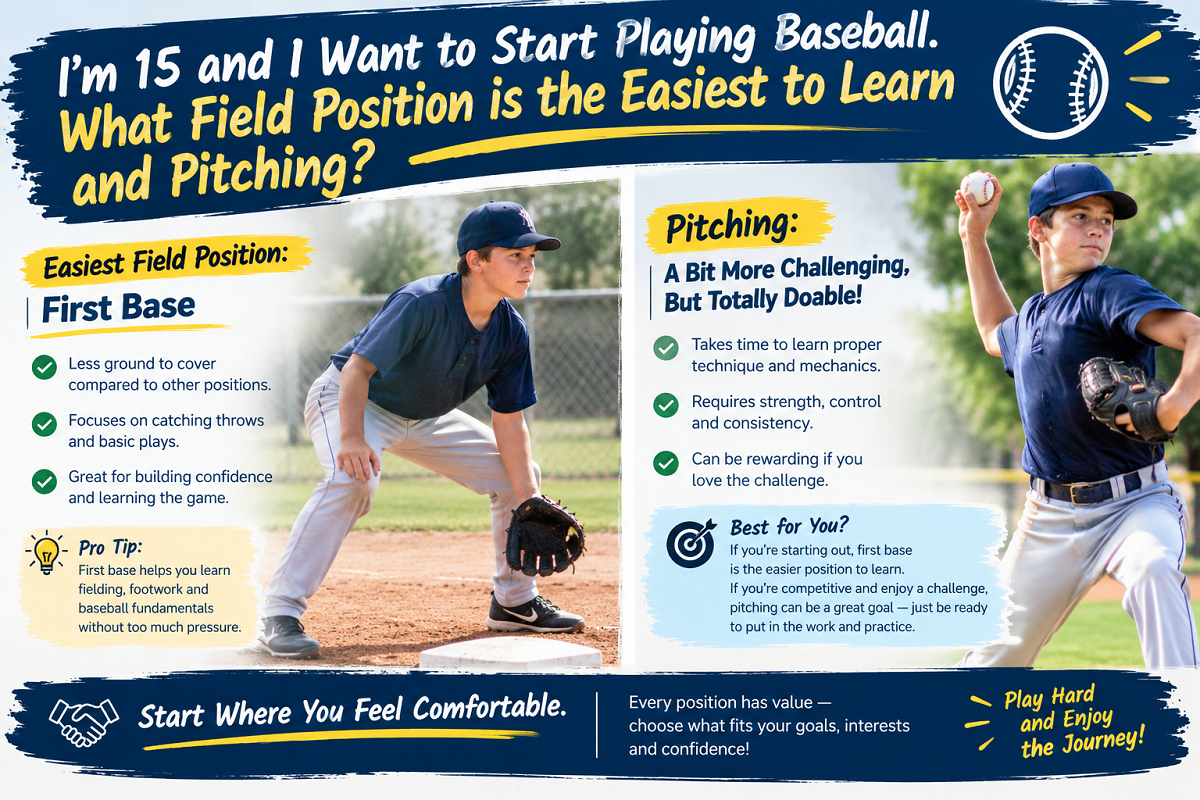
A beginner should throw 15 to 25 pitches per practice, at about 70 percent effort, 1 or 2 times a week. The goal is a smooth, repeatable delivery and hitting a target, not speed.
For the first month, many coaches keep new pitchers at 15 pitches: 10 fastballs, then 5 more after a break. Add 5 pitches only when the child finishes without arm soreness and with steady mechanics.
How many pitches should a 10-year-old throw in a pitching lesson?
A 30-minute pitching lesson for a 10-year-old should include no more than 25 to 35 actual pitches. The rest of the time should be drills, towel work, and instruction.
Lessons can hide a lot of throwing. Warm-up, drills, and pitches can easily add up to 80 or more throws. Ask the instructor for the total throw count and tell them about any games the child pitched that week. If the child pitched a game with 36 or more pitches in the last two days, skip the lesson's pitching portion and do shadow work only.
How many pitches should a 10-year-old throw at home or in the backyard?
Backyard pitching practice should stay at 15 to 25 pitches, 1 or 2 days a week, to a net or partner at a shortened distance (35–46 feet is common). Never add backyard pitching on top of a team bullpen the same day.
Home sessions feel casual, which is why they often run long. Set a counter, stop at the number, and put the ball away. A simple rule: if you did not count it, it did not happen, and that is how arms get overworked.
How Many Pitches Per Week Can a 10-Year-Old Throw?
There is no official weekly limit for ages 9–10. A practical ceiling for an experienced 10-year-old is about 100 to 120 total pitches per week, counting games and bullpens together. Beginners should stay closer to 50 to 75.
That range is a coaching guideline built to sit well below what the daily game limit and rest rules allow. If your child is near the top of the range every week, add rest, not more pitches.
How many bullpen sessions per week for a 10-year-old pitcher?
One or two bullpen sessions per week is enough for a 10-year-old. Space them at least one day apart and place them away from game days so the arm gets a recovery day between hard throwing days.
A good pattern is hard day, easy day, off day. If your child pitches in a game that week, one bullpen is usually plenty.
Can a 10-year-old pitch two days in a row?
Yes, but only if the first outing was 20 pitches or fewer, since 1–20 pitches requires zero rest days. Pitch Smart guidance for ages 9–12 also says no pitcher should appear in a game on three consecutive days, regardless of pitch count.
Even when it is allowed, back-to-back days should be the exception. If the first day was 20 pitches, keep the second day lighter.
Can a 10-year-old throw a bullpen the day after a game?
It depends on the game pitch count. After 1–20 pitches, a light bullpen of 15 to 20 is fine the next day. After 21–35, skip the next day. After 36 or more, wait out the full required rest before any bullpen.
The rest table applies to games. For bullpens, treat it as a guide: the first bullpen after required rest should be light.
What does a good weekly pitching schedule look like for a 10-year-old?
A safe week has one game outing, one or two light bullpens, and at least three days with no pitching. Here is an example with a Saturday game:
| Day | Plan | Pitches |
| Monday | Rest from pitching; fielding and shadow drills | 0 |
| Tuesday | Bullpen, one mechanics cue | 25 |
| Wednesday | Rest | 0 |
| Thursday | Light bullpen, short distance | 15 |
| Friday | Rest, no long toss | 0 |
| Saturday | Game, stay under limit | Up to 50 |
| Sunday | Rest (required if 36+ pitches) | 0 |
| Weekly total | ~90 |
How Many Days of Rest Does a 10-Year-Old Need After Pitching?
After pitching in a game, a 10-year-old needs 0 days of rest for 1–20 pitches, 1 day for 21–35, 2 days for 36–50, 3 days for 51–65, and 4 days for 66 or more. Rest is counted in calendar days.
This is the official Little League and Pitch Smart rest chart for ages 9–10. If a child pitches Tuesday, here is the earliest day he can pitch in a game again:
| Pitches Thrown Tuesday | Required Rest | Earliest Next Game Outing |
| 1–20 | 0 days | Wednesday |
| 21–35 | 1 day | Thursday |
| 36–50 | 2 days | Friday |
| 51–65 | 3 days | Saturday |
| 66–75 | 4 days | Sunday |
How are pitching rest days counted?
Rest days are calendar days, not game days. Weekends and off-days count. The day the pitcher threw does not count as rest, and neither does the day he pitches again.
Example: 45 pitches on Tuesday means Wednesday and Thursday are rest days, and Friday is the first eligible day.
Do practice pitches count toward rest days?
Officially, no. Rest days are set by game pitch counts. In practice, though, bullpen pitches add real stress, so a hard bullpen should never be thrown during a required rest day.
Do warm-up pitches count toward the pitch count?
In Little League, warm-up pitches before and between innings generally do not count toward the game pitch count, and the rest threshold is based on the first pitch thrown to a batter. Check your league rulebook to confirm.
Warm-ups still tire the arm, so keep them to what is needed and avoid extra pitches in the dugout.
What Is the Max Pitch Count for a 10-Year-Old?
The maximum is 75 pitches per day in a game for league ages 9 and 10, under both Little League rules and MLB's Pitch Smart guidelines. League age 11–12 players have an 85-pitch daily maximum.
A pitcher who reaches the limit in the middle of a batter can usually finish that batter, but should then come out of the game. Pitch Smart also says a pitcher removed from the mound should not return as a pitcher, and should not pitch in more than one game in a day.
What is league age vs. real age in youth baseball?
League age is the age a player is for the season based on a league cutoff date, not his age today. A child who is 10 in real life could be league age 9, 10, or 11, which changes his pitch limit.
Always check the league age before the season starts. The daily maximum rises with league age, but the rest-day chart stays the same for ages 9–12.
How many innings can a 10-year-old pitch in a year?
Pitch Smart recommends no more than 80 combined innings pitched in any 12-month period for ages 9–12, counting all teams, leagues, and tournaments.
Parents of kids on school, rec, and travel teams should add the innings from every team. Nobody else will.
How many months a year should a 10-year-old rest from throwing?
A 10-year-old should take at least 4 months off from throwing each year, with at least 2 to 3 of those months in a row, according to Pitch Smart guidelines for ages 9–12.
This means overhead throwing, not only pitching. Playing catch and long toss during the break defeats the purpose. Use the time for other sports like soccer, basketball, or swimming, which Pitch Smart specifically encourages.
How Many Throws a Day Is Too Much for a 10-Year-Old?
There is no official daily throw limit, but most 10-year-olds should stay under about 75 to 100 total throws on a normal day, including warm-up, fielding, and bullpen. On a pitching day, keep other throwing minimal.
The arm does not count only pitches. Every throw adds stress, and the throws that nobody counts are the ones that put kids over the edge. Use this quick tally to estimate a day or a week.
| Activity | Typical Throws to Count |
| Game or bullpen pitches | Count exactly |
| Warm-up catch before pitching | 15–30 |
| Infield practice (shortstop, third base) | 30–60 |
| Outfield practice | 20–40, with long throws |
| Catching in a game | 30–70, including throws back and to second |
| Pitching lesson (all throws) | 50–100 |
| Long toss session | 30–50 |
These ranges are rough estimates for planning. The point is to notice heavy days, not to count perfectly.
Can a pitcher also play catcher or shortstop?
It is not ideal. Pitch Smart advises 9–12 year olds to avoid playing catcher when not pitching, and Little League prevents a pitcher who throws 41 or more pitches from catching for the rest of that day.
Shortstop and third base also involve many hard throws. If your child is scheduled to pitch, ask the coach to put him at first base, in the outfield, or on the bench the rest of that day and the day before.
Should a 10-year-old do long toss?
Long toss can build arm strength, but it counts as a heavy throwing day. Keep it to 30 to 50 throws, increase distance gradually, and never schedule it on a required rest day after pitching.
For most 10-year-olds, long toss twice a month in season is plenty. In the offseason four-month break, skip it completely.
Does throwing a football or playing catch count?
Yes. Any overhead throwing adds workload. A few easy catch throws are fine, but long, hard backyard throwing or a long football session on a rest day can undo recovery.
Signs a 10-Year-Old Is Throwing Too Many Pitches
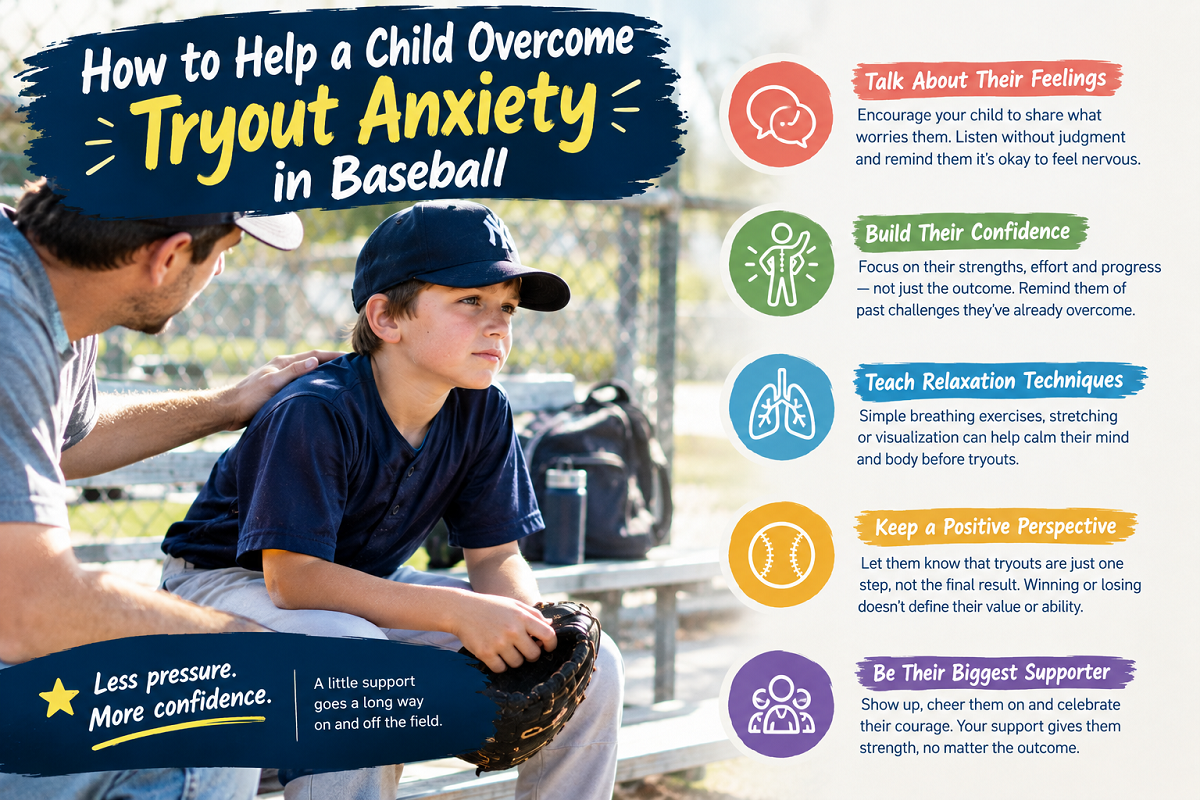
The earliest warning signs are usually mechanical, not painful: lost command, a dropping arm slot, a shorter stride, slower pace, and complaints of being tired. Pain in the elbow or shoulder is a stop sign.
What are the signs of arm fatigue in a young pitcher?
Signs of arm fatigue include missing the target badly, a lower arm slot, a collapsing back leg, shaking out the arm, slower velocity, heavy breathing, and saying the arm feels tired or heavy.
If you see two or more of these, end the session. A tired arm that keeps throwing is the most common path to injury, and research from the American Sports Medicine Institute has linked pitching while fatigued with a much higher chance of later surgery.
What arm pain should make a 10-year-old stop pitching?
Stop immediately for pain on the inside of the elbow, pain in the shoulder when throwing, swelling, warmth, loss of range of motion, a locked feeling, or numbness and tingling in the fingers.
Aching that lasts into the next day also counts. Do not let a child "test it out" by throwing harder to see if it hurts.
What is Little League elbow?
Little League elbow is irritation of the growth plate on the inner side of the elbow, caused by repetitive throwing stress. It is common in young pitchers and needs rest and a doctor's evaluation.
A similar condition, Little League shoulder, affects the growth plate near the top of the upper arm bone. Both happen because a child's growth plates are weaker than the tendons and ligaments around them. This guide is general education, not medical advice. See a pediatrician or sports medicine doctor for any pain.
What is the next-day arm check for youth pitchers?
The morning after a bullpen or game, have your child throw 10 easy catch throws and ask two questions: does anything hurt, and does the arm feel normal? If either answer is no, skip the next pitching session.
This takes two minutes and catches problems before they become injuries.
What Pitches Should a 10-Year-Old Throw in Practice?
A 10-year-old should practice mainly the fastball and the changeup. Pitch Smart guidance for ages 9–12 says to avoid throwing pitches other than fastballs and changeups.
The fastball teaches command and mechanics. The changeup teaches arm speed and feel, and it gives a young pitcher a way to get outs without stressing the arm.
Should a 10-year-old throw a curveball?
No. Most youth sports medicine guidance recommends waiting on the curveball until the early teens. At 10, the curveball adds forearm and wrist stress and distracts from learning to throw strikes.
A youth hitter will often swing at a bad curveball, which makes it seem like it works. That success is temporary and hides the lack of fastball command that every higher level requires.
What is the best changeup grip for a 10-year-old?
The easiest changeup grips for small hands are the circle change, the three-finger change, and the palm ball. The best grip is the one that feels comfortable and lets the arm move at the same speed as a fastball.
If the child squeezes the ball hard or twists the wrist, switch grips. A changeup should look like a fastball coming out of the hand.
How hard should a 10-year-old throw in practice?
Most practice pitches should be at about 70 to 85 percent effort. Full-effort throwing causes fatigue and mechanical breakdown faster, and command usually improves at moderate effort.
Skip radar guns and weighted-ball programs at this age. Velocity at 10 mostly reflects body size and timing.
10-Year-Old Pitching Practice Plans
A good 10-year-old pitching practice has four parts: a short warm-up, 5 minutes of towel or shadow work, 15 to 30 focused pitches in small sets, and a cool-down. Total pitching time is usually under 25 minutes.
Beginner bullpen plan (about 20 pitches)
- Dynamic warm-up and easy catch: 20 throws
- Towel drill for balance and stride: 5 minutes
- 10 fastballs to a target, one coaching cue only
- 2-minute break
- 5 changeup attempts
- 5 fastballs, finish strong
- Cool-down: 5 easy throws and stretching
Developing pitcher bullpen plan (about 30 pitches)
- Warm-up and catch: 20–25 throws
- Set 1: 10 fastballs; track strikes out of 10
- 2-minute break and one cue
- Set 2: 10 pitches mixing fastball and changeup
- Set 3: 10 fastballs at game pace to a fixed target
- End early if mechanics fade
Light bullpen after a game (15 pitches)
Use this only after the required rest has passed.
- Shadow pitching and towel work: 10 minutes
- 15 easy pitches from a shortened distance
- No long toss and no max effort
How can a 10-year-old improve pitching without throwing more pitches?
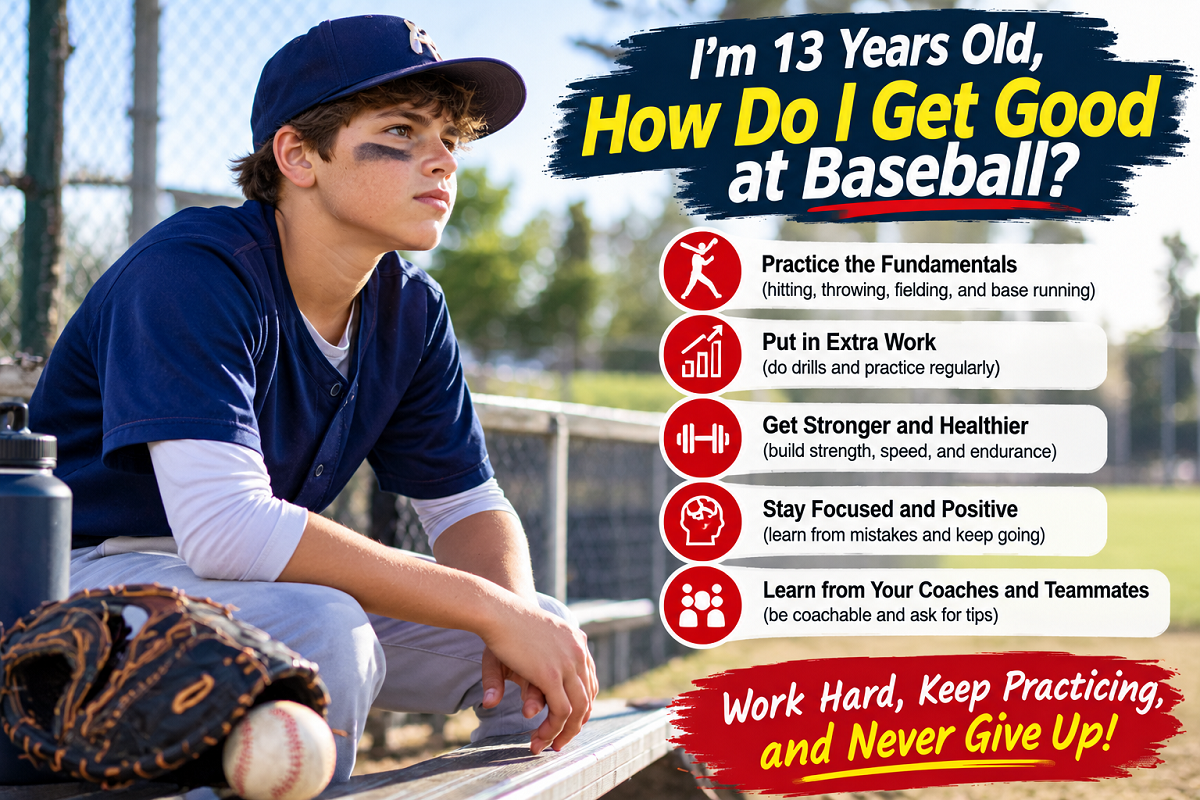
Improve pitching without extra pitches by using towel drills, shadow pitching, balance drills, one-cue practice, target tracking, and leg and core strength work. These build mechanics with almost no arm stress.
- Towel drills: full delivery with a towel instead of a ball.
- Target tracking: record strikes out of 10 and chase a small improvement.
- One cue per session: for example, point the glove at the target.
- Short-distance work: 30 to 40 feet at lower effort to build feel.
- Body-weight strength: squats, lunges, planks, and balance drills; no heavy lifting at this age.
How to Track a 10-Year-Old's Pitch Count
Track pitch count with a free app such as GameChanger, a handheld tally counter, or a simple notebook log. Assign one adult whose only job is counting, and record practice pitches as well as game pitches.
What should a youth pitcher's pitch log include?
A useful log includes the date, type of throwing (game, bullpen, lesson, long toss), pitch or throw count, an arm feeling score from 1 to 5, and the next date he is eligible to pitch.
After a month, patterns appear, such as arm soreness every time he throws two bullpens in one week. No chart can give you that information.
Who is responsible for tracking pitches in Little League?
Each Little League must designate an official pitch count recorder, usually the scorekeeper. Parents should still keep their own count, especially for practice and any games outside the league.
Travel Ball, Tournaments, and Softball Limits
Travel ball and tournaments often follow their own pitching rules, or none. Parents should track pitches themselves and apply the Pitch Smart limits and rest chart even if the event allows more.
Do travel ball teams have pitch count limits?
Some do, but many do not enforce Pitch Smart. Rules vary by organization and tournament, so ask for the written pitching policy before the season and keep your own log.
A 2011 study by University of North Carolina researchers commissioned by Little League reported that its pitch count program appeared to reduce shoulder injury risk among pitchers by about half. The concern is kids who pitch on teams outside any such program, or for multiple teams at once.
How many pitches should a 10-year-old throw in a tournament weekend?
Follow the same daily limit and rest chart: no more than 75 pitches in a day, no pitching in more than one game per day, and no three consecutive days of pitching. A safer target is under 50 pitches per day.
Tournaments stack games, so plan which games your child pitches before the weekend starts and tell the coach the limit.
Do softball pitchers have pitch counts?
Little League Softball regulates pitchers by innings rather than pitch counts. Softball pitchers should still track total throws, take offseason breaks, and watch for fatigue and pain.
FAQs
How many pitches is too many for a 10-year-old in one day?
More than 75 pitches in a game is over the Little League and Pitch Smart limit. In practice, more than about 40 pitches in a bullpen is too many for most 10-year-olds.
Is 50 pitches a lot for a 10-year-old?
It is within the 75-pitch game limit, but it triggers 2 days of required rest. In a practice bullpen, 50 pitches is more than recommended.
How many days should a 10-year-old rest after throwing 40 pitches?
After 36 to 50 pitches, a 10-year-old needs 2 calendar days of rest before pitching in a game again.
How many pitches can a 10-year-old throw in a week?
There is no official weekly cap. A practical limit is 100 to 120 total pitches for an experienced pitcher, fewer for beginners.
How often should a 10-year-old practice pitching?
One or two bullpen sessions per week, with a day off between them, is enough for most 10-year-olds.
Can a 10-year-old pitch every day?
No. Pitching every day ignores the rest requirements and violates the three-consecutive-days rule. Daily pitching also increases the risk of overuse injury.
Is it bad for a 10-year-old to throw too much?
Yes. Repeated overuse can irritate growth plates and cause pain, and throwing while fatigued raises injury risk. Count total throws, not just pitches.
How many pitches should a 9-year-old throw in practice?
Use the same practice guideline: 15 to 30 pitches per bullpen, 1 or 2 times a week. The game maximum is also 75 for league age 9.
How many pitches should an 11-year-old throw in practice?
About 25 to 40 pitches per bullpen for experienced pitchers. The game maximum rises to 85 for league ages 11–12.
Should a 10-year-old pitch off a mound?
Yes, if the league uses one, but add mound work gradually. Start with flat ground or a short distance for new pitchers and build slowly.
How far is the pitching distance for a 10-year-old?
Many Little League Minors and Majors divisions use 46 feet. Pitch Smart notes typical distances of 46 to 50 feet for ages 9–12, and your league may differ.
Does a 10-year-old need a pitching coach?
Not required, but a qualified coach can help with safe mechanics. Look for one who limits throw counts and asks about games and recent workload.
Can a 10-year-old pitch with a sore arm?
No. Stop throwing, rest, and see a pediatrician or sports medicine doctor if the soreness lasts or comes with swelling, pain, or tingling.
How long should a 10-year-old rest after a baseball season?
At least 4 months a year with no overhead throwing, with at least 2 to 3 months in a row, according to Pitch Smart guidelines.
What is a good pitching speed for a 10-year-old?
Speed varies widely at this age and is not a good measure of progress. Focus on strikes, balance, and a repeatable delivery.
Final Thoughts
The safest answer to how many pitches a 10-year-old should throw in practice is 20 to 35 per bullpen, 1 or 2 bullpens per week, never more than about 40, and never during required game rest.
Count practice like a game, include the throws nobody counts, take at least four months a year off from throwing, and treat fatigue as the first warning sign. A healthy 10-year-old who learns to throw strikes with a smooth delivery has a better baseball future than one who burned out his arm early. Rules can change, so check your league's current rulebook and Pitch Smart's latest guidance each season, and see a pediatrician or sports medicine doctor for any pain.

About Premium Author
This post has been authored and published by one of our premium contributors, who are experts in their fields. They bring high-quality, well-researched content that adds significant value to our platform.
Popular Categories
Stay Connected
Recent Posts