How to Get Good at Baseball at 13: 2026 Training Guide
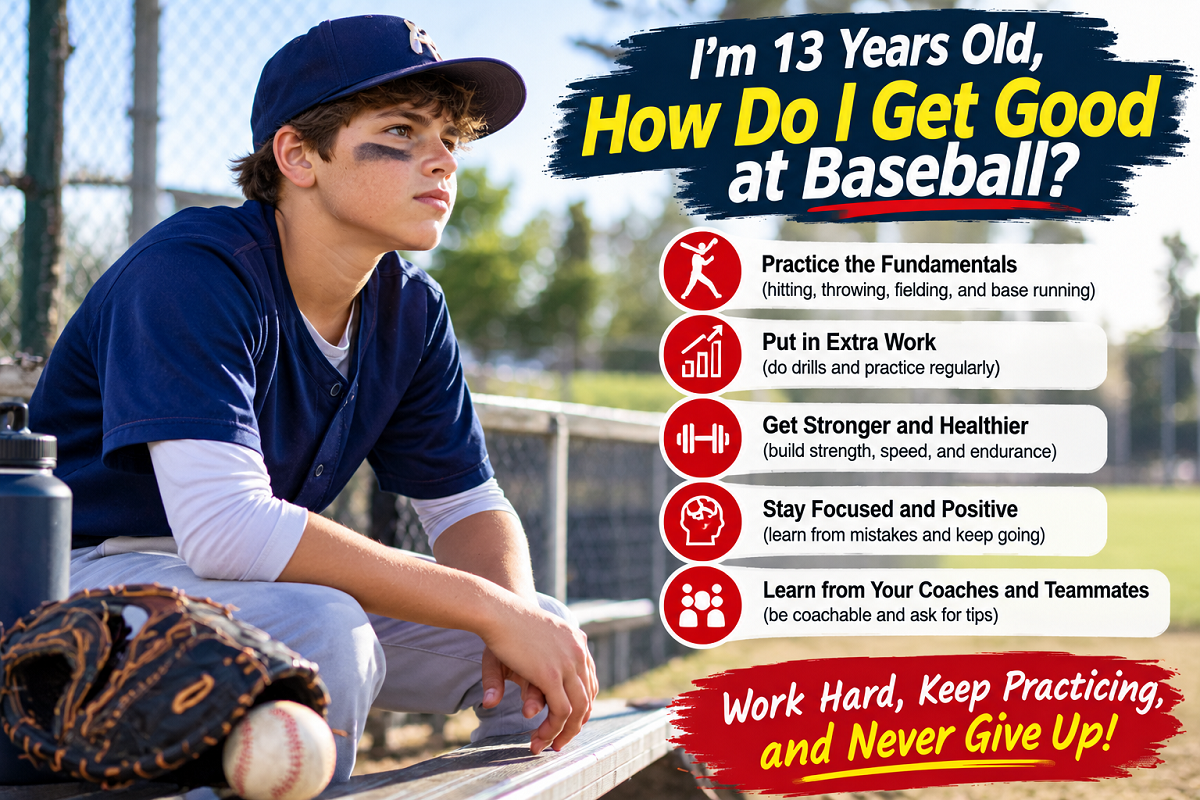
Table of Contents
- Quick Answer: What Actually Makes a 13-Year-Old Better
- What Changed in Youth Baseball for 2026
- Is 13 Too Late? An Honest Answer
- Find Your Starting Point: A Self-Test You Can Do This Weekend
- Throwing: Fix the Foundation First
- Hitting: A Tee-to-Live-Pitching Ladder
- Fielding and Choosing a Position
- Baserunning and Speed
- Baseball IQ: Learn to Think Two Plays Ahead
- How to Practice Alone: Four 30-Minute Sessions
- A 12-Week Plan You Can Follow
- Strength, Mobility, and Arm Care
- Pitching at 13: Current Pitch Smart Rules
- The Mental Game
- Growth Spurts, Sleep, and Food
- Gear in 2026: Bats, Gloves, and Cleats
- Tryouts, Getting Cut, and Finding Playing Time
- Using Your Phone to Coach Yourself
- Eight Mistakes That Hold Players Back
- Frequently Asked Questions
- Final Thoughts and Sources
Quick Answer: What Actually Makes a 13-Year-Old Better
A 13-year-old gets good at baseball by practicing 30 to 45 focused minutes on most days, training all five skills (throwing, hitting, fielding, baserunning, and baseball IQ), and protecting the arm with rest and smart workloads. That is the whole formula. The details below show you how to do it without a coach, a field, or expensive gear.
Most advice online tells you to take more swings or throw harder. That is why so many players plateau. At 13 your body is changing, the field may be getting bigger, and the rules around bats and pitching have recently been updated. The players who improve fastest are the ones who know what to work on, can measure it, and stay healthy.
Your First Seven Days
- Day 1: Do the self-test in this guide and write down your scores.
- Day 2: Play 10 minutes of slow, focused catch and take 30 tee swings.
- Day 3: Field 40 ground balls off a wall or from a partner.
- Day 4: Rest from throwing. Do bodyweight strength and stretching.
- Day 5: Repeat Day 2 and add 5 short sprints.
- Day 6: Play a game, scrimmage, or backyard play. Have fun.
- Day 7: Full rest, then write down what felt better.
What Changed in Youth Baseball for 2026
Several rules that affect 13-year-olds changed recently, and a lot of older articles still show the old information. Check these before you buy a bat or plan your pitching.
New Bat Standard for 14U Travel Ball
USSSA moved its national 14U standard from a maximum -5 drop to BBCOR -3 (or wood), effective January 1, 2026, according to Baseball Monkey's 2026 bat guide. If you play USSSA 14U national events, last year's -5 bat is no longer the safe choice. Always confirm with your own league, because local play can differ.
Rec Leagues Still Use USABat
Little League, Cal Ripken, Babe Ruth, PONY, and similar leagues generally require the USA Baseball logo on non-wood bats for players 14 and under. A USSSA-stamped bat is not legal in those leagues, while a USA-stamped bat is accepted at USSSA events.
High School Bat Rules Are Changing Too
On July 8, 2026, USA Baseball and the NFHS Rules Committee announced that the high school standard is being renamed USA BBCOR, and that starting with the 2028 season high schoolers can also use USABat -4, -5, and -6 bats alongside the -3, per USA Baseball's FAQ. If you are 13 today, this matters for the bat you will use in a couple of years.
Pitch Smart Is More Specific Than Before
Current Pitch Smart guidance for ages 13 and 14 sets a 95-pitch daily maximum, no more than 100 combined innings in any 12 months, at least four months a year off from throwing (with two to three of them continuous), and no pitching on three consecutive days. It also says breaking pitches can begin once you have a consistent fastball and changeup. Details are in the pitching section and in MLB's official 13-14 guidelines.
Little League's Small 2026 Updates
For 2026 Little League permits pine tar and similar adhesives, allows thumb protectors for batters, and removed the neoprene distinction for pitcher sleeves, according to Little League's 2026 update. These are small changes, but they are a good reminder to read your league's current rulebook every year.
Is 13 Too Late? An Honest Answer
No. Thirteen is not too late, but it is the age when habits start to matter more than raw talent. Players who build clean mechanics and good routines now have years to benefit from them. Players who rely only on being bigger or faster than everyone else often get passed once growth evens out.
What You Can Realistically Change in a Season
In 12 weeks of consistent work you can usually improve throwing accuracy, ground ball consistency, tee and front-toss contact, baserunning decisions, and your understanding of situations. Raw arm strength and bat speed improve more slowly and depend heavily on growth and strength, so judge yourself on skills first.
What Takes Longer
Power, top-end velocity, and sprint speed are tied to body maturity. If your friends have grown faster than you, do not chase their numbers. Chase clean mechanics and consistency, and let your body catch up on its own schedule.
The Late Bloomer Advantage
Smaller players often learn bat control, smart baserunning, and sound fielding because they cannot rely on strength. When their growth spurt arrives, those skills are already in place, and they can add power on top of a strong base.
Find Your Starting Point: A Self-Test You Can Do This Weekend
You cannot fix what you have not measured. This 45-minute self-test gives you a baseline. Write the numbers in a notebook and repeat the test every four weeks.
| Skill | How to test it | What to record |
|---|---|---|
| Throwing accuracy | Throw 10 balls at a target (a 2-foot square on a wall or net) from 45 feet | Hits out of 10 |
| Quick transfer | Field 10 rebounds off a wall and throw to the target | Clean transfers out of 10 |
| Ground balls | Take 20 grounders (partner or wall) and finish each with a throw | Clean plays out of 20 |
| Fly balls | Have someone toss or hit 10 balls in different directions | Catches out of 10 |
| Tee contact | 20 swings off a tee into a net, aiming at the middle | Hard, centered hits out of 20 |
| Speed | 30-yard sprint from a standing start, timed on a phone | Best of 3 times |
| Baseball IQ | Answer: what is your play with a runner on second and one out if the ball is hit to you? | Right or wrong, and why |
How to Read Your Results
Your two lowest scores are your first priorities for the next four weeks. Do not compare your numbers to a stranger's chart. Players develop at very different speeds at 13, so the only comparison that matters is you against last month.
Add a Coach's Opinion
Ask a coach, an older player, or a parent who watches you play to rate you honestly in the same categories. Players often rate themselves too high on hitting and too low on defense. A second opinion keeps your plan honest.
Throwing: Fix the Foundation First
Every position in baseball depends on throwing. A clean, accurate throw also protects your arm, because most wild throws come from rushing or poor footwork rather than a weak arm.
The Grip and the Finish
Hold the ball across the seams with your first two fingers on top and your thumb underneath. Keep a small gap between the ball and your palm so it can come off your fingertips. Finish with your throwing hand moving across your body toward the opposite knee. A short, cut-off finish is one of the most common reasons throws sail high.
The Four-Step Throw
- Turn: Point your glove-side shoulder at the target.
- Step: Stride directly toward the target with your front foot.
- Rotate: Let your hips open before your arm comes through.
- Finish: Whip through the target and follow it with your body.
Say these steps out loud for the first two weeks. It sounds silly, but it turns a rushed throw into a repeatable habit.
Fixing the Three Most Common Throwing Problems
- Throws sail high: Your finish is probably short or you are leaning back. Finish with your chest over your front knee.
- Throws miss left or right: Your front foot is landing off line. Put a piece of tape on the ground pointing at your target and step on it.
- Throws feel weak: You are probably throwing with only your arm. Push off the back leg and rotate the hips first.
A Smarter Way to Play Catch
Spend the first few throws at 15 to 20 feet working on grip and finish only. Move back to 45 to 60 feet and add full footwork. Add a crow hop (a small hop-step forward that builds momentum) only after your basic throw is accurate. Come back in and finish with easy throws. Never lengthen distance quickly, and stop if you feel sharp pain.
Accuracy Before Distance
Long toss can be helpful for some players, but at 13 it should not replace accuracy work. Pick a target on every throw, even in catch. A simple game is to keep a running score: one point for every throw that hits the chest or glove without the partner moving, and try to beat your best streak.
Hitting: A Tee-to-Live-Pitching Ladder
Most players jump straight to live pitching or hit the same tee ball over and over without a plan. A progression works better because you earn the harder step only after the easier one feels solid.
Step One: Build the Setup
Stand with feet a little wider than your shoulders, knees soft, weight balanced, and hands relaxed near your back shoulder. Keep your eyes level and watching the pitcher with both eyes. Take a small, quiet stride and keep your head still as you rotate your hips and shoulders together.
Step Two: Tee Work With a Purpose
The tee is not just for beginners. Professionals use it constantly. Do four rounds of 10 swings, changing the tee location each round:
- Middle of the plate, hit the ball back up the middle.
- Inside corner, tee closer to the front hip, pull the ball.
- Outside corner, tee deeper by the back hip, hit it the other way.
- Your choice of location, with a game-like swing.
Change the location, not the swing. This trains you to hit different pitches without changing your mechanics.
Step Three: Soft Toss and Front Toss
Once your tee contact is steady, move to soft toss from the side and then front toss from about 20 to 30 feet using soft or training balls. The goal is tracking the ball from release to contact without panic. If you start missing a lot, go back to the tee for a day and rebuild.
Step Four: Live Pitching and Machines
Begin with a pitching machine or a pitcher you trust at a speed slightly below game speed. Move up in speed only when you are hitting hard line drives consistently. Facing speed you cannot handle teaches bad habits, such as bailing out or lunging.
Learn to See the Pitch
Hitting is also a vision skill. At practice, watch a pitcher's release point and call ball or strike out loud before the ball arrives. Even when you are not swinging, doing this builds timing and plate discipline. Players who swing at fewer bad pitches usually get on base more, and getting on base is how you help a team win.
Hitting by the Count
| Count | Mindset | Goal |
|---|---|---|
| 0-0 | Look for a good pitch in your zone | Do not take a fastball down the middle just to be patient |
| Ahead (2-0, 3-1) | Be selective and aggressive | Hit your pitch hard |
| Behind (0-1, 0-2) | Protect the plate | Shorten your swing and put the ball in play |
| Two strikes | Stay simple | Choke up slightly, see the ball deep, hit it the other way |
Bat Weight and Swing Speed
A bat that is too heavy slows your hands and changes your swing. Choose the bat you can swing fast and under control, then follow the certification rules for your league (see the gear section). Chasing a bigger bat because a teammate has one rarely makes you a better hitter.
Fielding and Choosing a Position
Good fielding comes from body position and footwork far more than from soft hands. Coaches notice players who make routine plays every time, because routine plays decide most games.
The Ground Ball Routine
- Get low with your feet wider than your shoulders and your glove out in front.
- Read the hop and decide whether to charge, stay, or back up a step.
- Field the ball in front of your body with two hands.
- Funnel the ball to your throwing side while your feet get into throwing position.
- Throw with a target in mind, not just in a direction.
Slow reps come first. Fifty clean, slow ground balls are worth more than a hundred rushed ones.
Three Drills That Build Hands and Feet
- Short-hop drill: Stand 10 feet from a wall and throw a ball so it bounces just in front of you. Field it with two hands. This trains your hands to adjust to bad hops.
- Left-right drill: Roll or toss ground balls five feet to each side. Move your feet to get in front of the ball before you glove it.
- Eyes-closed-then-open drill: Have a partner roll a ball while you look away. Turn at their call and field the ball. This builds reaction speed.
Outfield Basics
Outfielders win games with first steps and routes. When the ball is hit, take a step back first if you are unsure, because balls over your head are harder than balls in front. Run to the spot where the ball will land, not directly at it, and catch it above your eyes with two hands when you can. Always call the ball loudly with a clear I got it, and listen for teammates.
Catching at 13
Catchers have to be tough, calm, and vocal. Learn to receive pitches with a relaxed glove hand, block balls in the dirt by dropping to your knees and keeping your chest over the ball, and make quick, accurate throws to second base. Remember that Pitch Smart advises avoiding catching on days when you are not pitching if you also pitch, because both roles stress the arm.
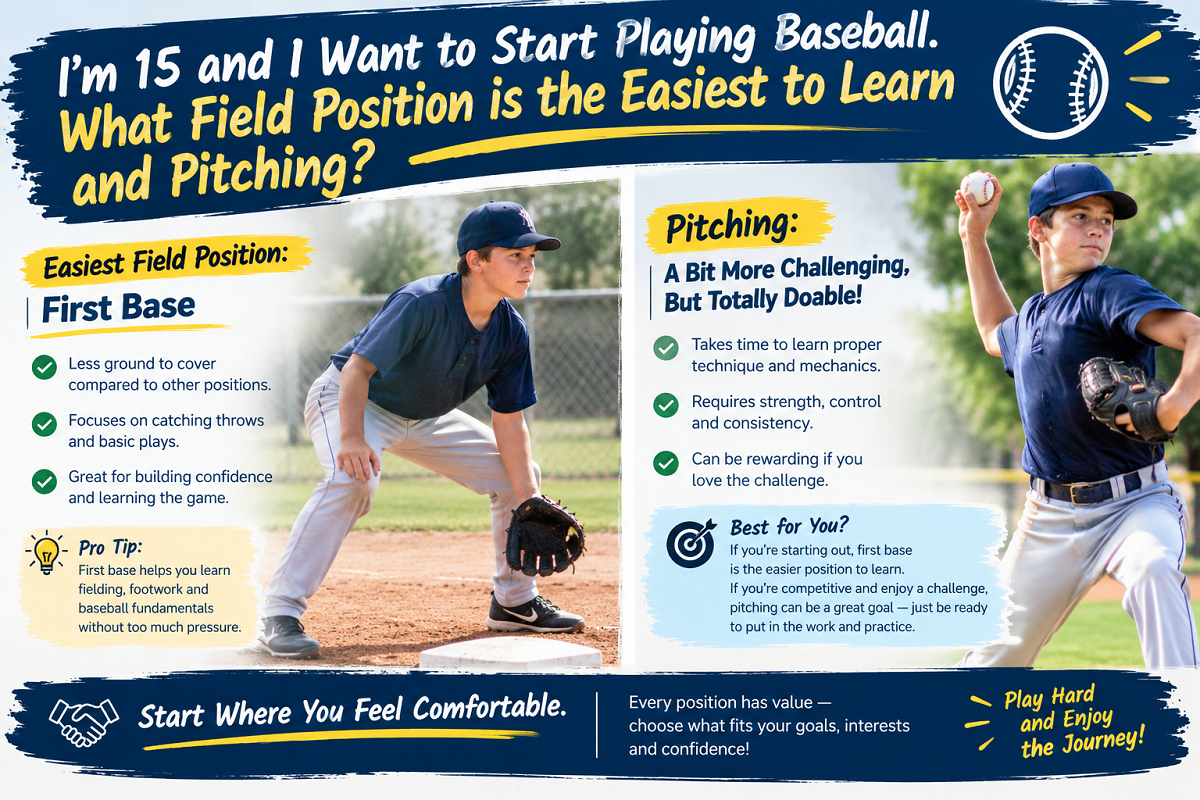
How to Choose a Position
Try shortstop, second base, third base, the outfield, first base, and catcher at least once in practice. Ask yourself:
- Do I have quick feet and an accurate arm? Try middle infield.
- Am I fast and good at tracking fly balls? Try center field.
- Do I have a strong arm and good hands? Try third base or right field.
- Am I tall, flexible, and good at scooping throws? Try first base.
- Am I tough, calm, and a leader? Try catcher.
At 13, being willing to play more than one position is a major advantage. It helps you get playing time and shows coaches that you understand the whole game.
Baserunning and Speed
Baserunning is the cheapest way to add value to a team because it does not depend on size. Many young teams give away runs by running poorly, so a player who runs smartly stands out.
Run Hard Every Time
Sprint through first base on every ground ball, including routine ones. Fielders at this level boot or rush throws more often than you might think. Run through the bag instead of slowing down before it, and touch the front or the side of the base.
Leads, Reads, and Secondary Leads
Take a lead that lets you get back safely if the pitcher throws over. Watch the pitcher, not the ball, until the pitch is released. Once the pitcher commits to the plate, take a small secondary lead (a short shuffle as the ball crosses the plate) so you can react quickly to a ball in the dirt or a hit.
Reading the Ball in the Dirt
On a ball that bounces away from the catcher, take off if it goes more than a couple of steps away. If it stays in front of the catcher, hold and slide back. Practice by having a partner throw balls into the dirt while you work on your read.
Turning a Single Into a Double
At first base, hit the inside corner of the bag with your foot as you round, so you stay on a tight path. If the outfielder bobbles the ball or throws casually, keep going. Keep your head up and watch for the third-base coach.
Speed Training You Can Do at Home
- 6 to 8 sprints of 10 to 20 yards, with full rest between each
- 4 base-to-base runs, walking back as recovery
- Jump rope for 3 sets of 30 seconds
- Single-leg hops and broad jumps for 3 sets of 5
The key rule is quality over quantity. Stop the session when your speed drops, not when you are exhausted.
Baseball IQ: Learn to Think Two Plays Ahead
Baseball IQ is the skill most players ignore, and it is the one that makes everyone else on the field trust you. It means knowing what you will do with the ball before it is hit.
The Three Pre-Pitch Questions
Before every pitch, ask yourself:
- How many outs are there?
- Where are the runners?
- If the ball comes to me, where does it go?
Say the answers quietly to yourself. After a few weeks it becomes automatic.
Situational Cheat Sheet
| Situation | Typical play for the defense |
|---|---|
| Nobody out, runner on first | Look for the double play, but get the sure out if the ball is slow |
| One out, runner on third, infield in | Check the runner, then throw home only if the play is close |
| Two outs, runner on any base | Take the easy out at first, because it ends the inning |
| Runner on second, ball to the outfield | Hit the cutoff man, because it keeps the runner from taking an extra base |
These are general guidelines, and your coach may have different rules, so treat them as a starting point.
Watch Games Like a Student
When you watch baseball, pause before each pitch and guess the situation. Where should the fielders play? What would you do if the ball came to you? Notice how pitchers set up hitters, how infielders shift their positions slightly, and where outfielders move on different counts. Fifteen minutes of this three times a week builds instincts that drills cannot.
Know the Rules You Might Be Tested On
Learn the infield fly rule, how a dropped third strike works, balks, tag-up rules, and the force play versus the tag play. Players who know the rules take extra bases and avoid costly mistakes. Your league's rulebook is often free online or in an app.
How to Practice Alone: Four 30-Minute Sessions
Playing alone is possible, and plenty of players improve this way. The key is a session with a clear plan so you are not just passing time.
Session A: The Wall and Net Throwing Session
- 5 minutes: Dynamic warm-up and arm bands.
- 10 minutes: Throw at a wall target from 20 to 30 feet, 10 throws at a time, stepping toward the target.
- 10 minutes: Field rebounds off the wall, forehand and backhand, with a quick transfer and throw.
- 5 minutes: Easy throws and stretching.
Session B: The Tee and Net Hitting Session
- 5 minutes: Warm up with shadow swings in front of a mirror.
- 15 minutes: Four rounds of 10 tee swings, changing the location each round.
- 5 minutes: Drill work such as one-hand swings with a light bat or a towel swing.
- 5 minutes: Visualize hitting off a pitcher, then take 5 game-speed swings.
Session C: The Speed and Strength Session
- 8 minutes: Jog and dynamic stretching.
- 10 minutes: Sprint work with full rest.
- 10 minutes: Bodyweight circuit of squats, lunges, pushups, and planks.
- 2 minutes: Cool down and breathe.
Session D: The Baseball IQ Session
- 10 minutes: Watch an inning of a game and pause before each pitch to predict the play.
- 10 minutes: Write down three situations and what you would do in each.
- 10 minutes: Review your notebook scores and set the next goal.
Make It Fun
Turn practice into games, such as scoring yourself on how many wall throws hit the target or how many tee balls hit your target spot. Competing with your own score keeps you engaged and builds consistency.
A 12-Week Plan You Can Follow
This plan assumes you have school and maybe team practices. It fits around a normal week and builds in rest. Adjust it if your coach gives you a different schedule.
The Weekly Template
| Day | Focus | Time |
|---|---|---|
| Monday | Throwing and fielding (Session A) | 30 to 40 min |
| Tuesday | Hitting (Session B) | 30 to 40 min |
| Wednesday | Speed and strength (Session C) | 30 min |
| Thursday | Fielding, baserunning, and light catch | 30 min |
| Friday | Hitting plus baseball IQ (Session D) | 30 to 40 min |
| Saturday | Game, scrimmage, or play another sport | Flexible |
| Sunday | Full rest | None |
If you have team practices, those replace the matching sessions. Do not stack extra throwing on a day you already threw hard in a game.
Weeks 1 to 4: Build the Base
- Slow, focused catch with footwork on throwing days.
- Tee work at four locations, 40 swings per session.
- 40 to 50 clean ground balls per fielding session.
- Bodyweight strength twice a week.
- Record your self-test numbers and one video each of your swing and throw.
Weeks 5 to 8: Add Speed and Game Skills
- Move from tee to soft toss and front toss.
- Add game-speed fielding and short sprints.
- Practice leads, reads, and turns at first base.
- Add a daily band routine for the shoulder.
- Watch two full games and write down three situations from each.
Weeks 9 to 12: Compete and Refine
- Take live at-bats against real pitching whenever possible.
- Play scrimmages and pickup games to practice decisions under pressure.
- Repeat the self-test and compare it to week 1.
- Re-film your swing and throw and compare.
- Set new goals for the next 12 weeks.
The Rest Week Rule
Every fourth or fifth week, cut your volume roughly in half. Your body adapts when you rest, and many players find they feel faster and fresher after a lighter week.
Strength, Mobility, and Arm Care
You do not need a gym to get stronger at 13. Good movement patterns and bodyweight work are the safest and most useful place to start.
A 20-Minute Bodyweight Circuit
Do this two or three times per week, resting at least a day between sessions. Complete three rounds with 30 to 45 seconds of rest between rounds.
- 10 bodyweight squats
- 8 reverse lunges per leg
- 8 to 12 pushups (on your knees if needed)
- 20-second plank
- 10 glute bridges
- 8 band rows or inverted rows
Move slowly and keep good form. If you cannot do a movement cleanly, scale it down.
Lifting Weights at 13
Lifting can be safe for teenagers when it is supervised, uses proper form, and does not involve maximum lifts. If you want to lift, ask a qualified coach or trainer who works with young athletes. Skip supplements, and avoid programs that promise quick velocity gains.
Hips, Thoracic Spine, and Ankles
Baseball power comes from the legs, hips, and trunk, not just the arm. Tight hips and a stiff upper back can lead to a weak swing and extra stress on the shoulder and elbow. Spend five minutes a day on hip openers, shoulder-blade squeezes, and ankle mobility.
Daily Arm Care
Before throwing, warm up your whole body with a light jog, dynamic stretching, and band work. After throwing, do gentle stretches. A light band routine for external rotation, internal rotation, and rows, 10 to 15 reps each, is a good start. If your coach or a physical therapist gives you a different routine, follow theirs.
Warning Signs That Mean Stop
Stop throwing and tell an adult if you have sharp elbow or shoulder pain, pain on the inside of the elbow, swelling, tingling in your fingers, or a sudden loss of control or velocity with pain. Growth plates in young players are weaker than the tendons attached to them, so playing through pain can cause serious injuries. See a doctor if pain does not go away after a few days of rest.
Pitching at 13: Current Pitch Smart Rules
Pitching is exciting and risky at this age. The best pitchers at 13 are not the hardest throwers. They are the ones who throw strikes, stay healthy, and keep improving year after year.
The Official Numbers
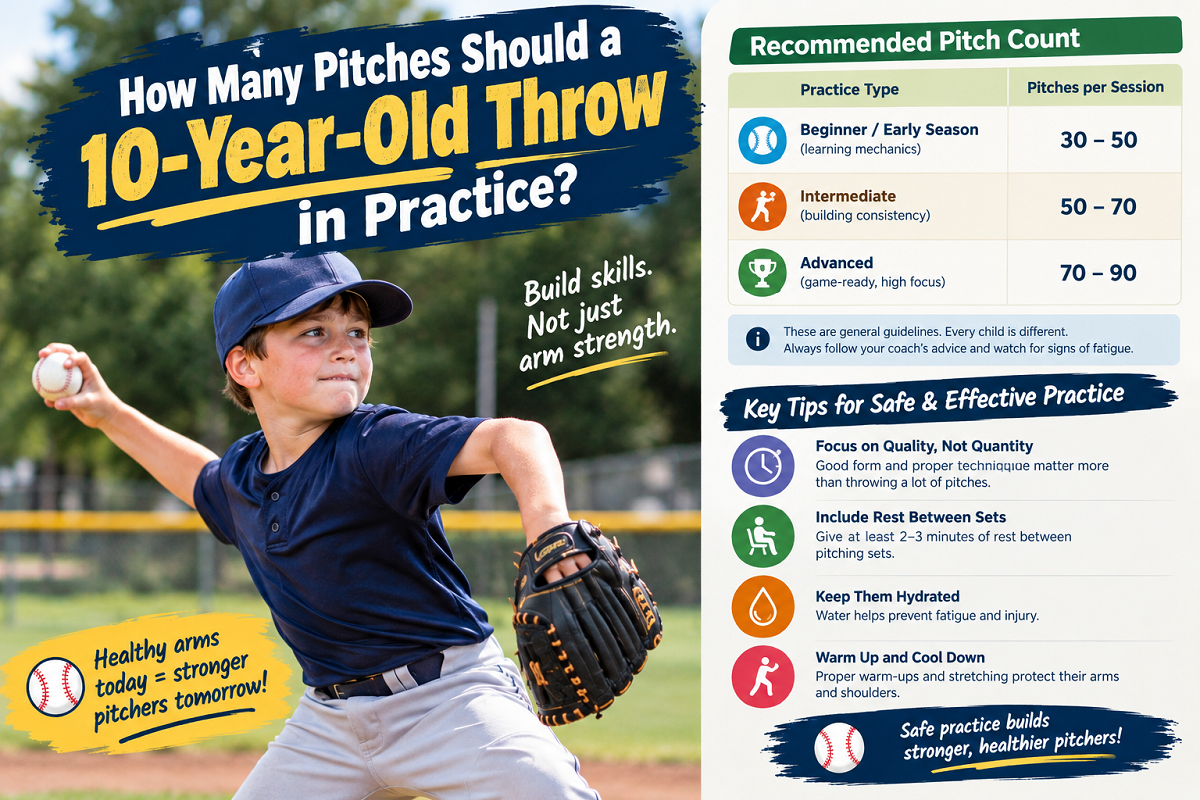
Pitch Smart is the guideline set from MLB and USA Baseball. For ages 13 and 14 it sets a daily maximum of 95 pitches, with required rest based on how many pitches you threw, according to MLB's Pitch Smart guidelines.
| Pitches thrown in a game | Required rest |
|---|---|
| 1 to 20 | 0 days |
| 21 to 35 | 1 day |
| 36 to 50 | 2 days |
| 51 to 65 | 3 days |
| 66 or more | 4 days |
Rules Most Articles Leave Out
- Do not exceed 100 combined innings pitched in any 12-month period.
- Take at least four months off from throwing every year, with two to three of those months continuous.
- Do not pitch in multiple games on the same day.
- No pitcher should pitch on three consecutive days, regardless of pitch count.
- Avoid playing for multiple teams at the same time.
- Avoid playing catcher on days you are not pitching.
- Play other sports during the year.
Those rules come from MLB's ages 13-14 page. Your league may be stricter, so follow the stricter rule.
Tournaments Are Where Problems Happen
A published study of youth tournaments found noncompliance with Pitch Smart guidelines in more than 90 percent of teams, as reported in a PubMed Central review. Tournament weekends can pile up pitches fast. Keep your own pitch log and tell your parents and coach what you have thrown, even if the scoreboard operator is tracking it too.
Learn Mechanics Before Velocity
Work on balance at the top of your leg lift, a stride toward the target, and a full follow-through. Film yourself from the side and from behind. If your front side flies open early or your arm drags behind your body, fix that before you try to throw harder.
Pitch Types at 13
MLB's current guidance says players can begin breaking pitches after developing a consistent fastball and changeup. That means your fastball and changeup should come first. Build command, learn to throw with the same arm speed on both, and only then talk with your coach about adding a breaking ball. If you feel elbow or forearm pain, stop.
A Pitching Week Template
| Day | Activity |
|---|---|
| Day after a start | Light catch or full rest, depending on pitches thrown |
| Mid-week | Bullpen of 20 to 30 pitches at moderate effort, if your coach approves |
| Day before a start | Light catch and mobility |
| Game day | Follow pitch count and rest rules |
The Mental Game
Baseball is a game of failure. A good hitter fails most of the time. If you want to get good, you need habits that help you handle that.
Create a Reset Routine
After a strikeout or error, take one slow breath, tap your glove or cleat, and say a trigger word to yourself such as next. The goal is to be ready for the next pitch, not to forget the mistake forever. A reset routine takes five seconds and keeps one mistake from becoming three.
Handling a Slump
Every player has slumps. When it happens, go back to the tee, shorten your focus to one thing, and talk to your coach. Make one small adjustment at a time. Slumps often come from rushing, trying to do too much, or pressing after a bad game.
Dealing With Fear of the Ball
Being afraid of a pitch or a hard grounder is common, and it does not mean you are weak. Use soft or training balls at first, wear proper gear, and take it one rep at a time. Confidence grows from repeated safe success. Tell your coach if you are struggling so they can help you progress gradually.
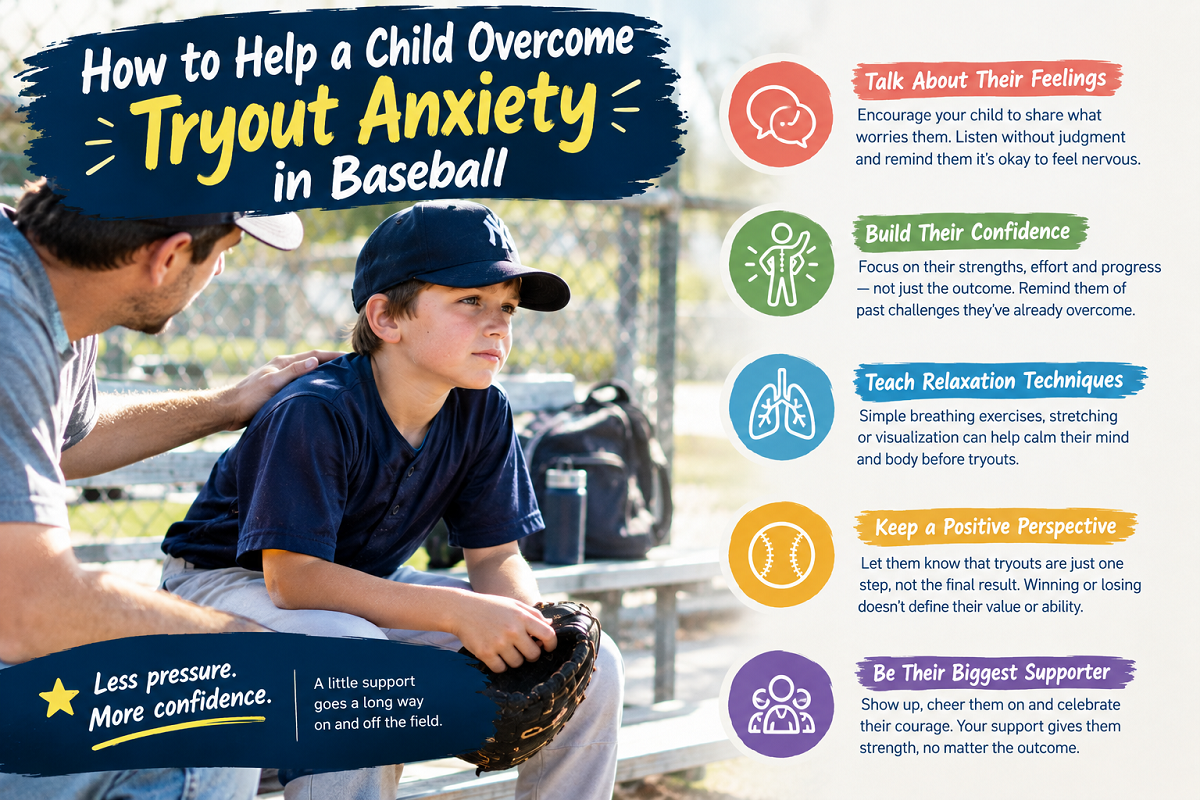
Handle Pressure and Nerves
Slow breathing helps. Breathe in for four seconds, hold for two, and out for six. Repeat three times before your at-bat. Nerves mean you care, and many players feel better after the first pitch.
Be the Teammate Coaches Remember
Hustle, positive talk, quick feedback to teammates, and attention on the bench matter. Coaches often pick between players with similar skills based on attitude. Being easy to coach is a real skill.
Growth Spurts, Sleep, and Food
Training only works if your body can recover. Sleep, food, and patience during growth often matter more than an extra hour of practice.
Why You Might Feel Clumsy
When your arms and legs grow quickly, your brain needs time to recalibrate. You may swing late, throw wild, or feel awkward for a few weeks. Keep your drills simple, slow down, and repeat the basics. This is a normal stage, not a step backward.
Aches Around Growth Plates
Soreness near the knee, heel, or elbow during a growth spurt can come from overuse. Reduce your volume, add mobility work, and see a doctor if pain lingers or is sharp. Never push through joint pain.
Sleep
Most teenagers do better with around 8 to 10 hours of sleep. Sleep is when your body repairs muscle and your brain locks in new skills. Keep a regular bedtime and keep screens out of the last 30 minutes before bed.
What to Eat
Eat regular meals with protein (eggs, chicken, fish, beans, dairy), carbohydrates (rice, pasta, oats, fruit, potatoes), healthy fats (nuts, avocado, olive oil), and vegetables. Have a snack with carbs and some protein an hour or two before practice. Drink water all day, not just at practice. Skip energy drinks and supplements unless a doctor has recommended them.
A Simple Game Day Plan
| Time | What to do |
|---|---|
| 3 hours before | Eat a normal meal with carbs and protein |
| 1 hour before | Light snack such as a banana or granola bar, plus water |
| During | Sip water between innings |
| After | Eat a meal with protein and carbs within an hour or two |
Gear in 2026: Bats, Gloves, and Cleats
The right gear will not make you good, but the wrong gear can get you ruled out of a game or slow your development.
Bat Rules at a Glance
Rules differ by league and event, so always check your own. This table summarizes what current sources say.
| Where you play | What the bat usually needs |
|---|---|
| Little League, Cal Ripken, Babe Ruth, PONY, Dixie Youth (14U and under) | USABat mark on non-wood bats |
| USSSA 14U national events (from Jan 1, 2026) | BBCOR -3 or wood |
| USSSA events for younger travel divisions | USSSA 1.15 BPF stamp (USA bats are also accepted); confirm for 13U |
| USA Baseball 13U/14U/15U events | USABat or BBCOR, up to 34 inches long |
| High school (current) | BBCOR -3; starting in 2028 USABat -4, -5, -6 also allowed |
Sources: Baseball Monkey, Axe Bat's certification guide, and USA Baseball's FAQ.
How to Pick a Bat
A BBCOR bat is always a -3 drop, meaning it weighs three ounces less than its length in inches, so a 31-inch bat weighs 28 ounces. That is heavy for many 13-year-olds. If your league allows lighter bats, do not move to a -3 until you can swing it under control. If your travel team requires BBCOR at 14U, try bats in person, take real swings, and pick the one you can keep fast through the zone.
A quick check: you should be able to swing the bat at game speed without your front shoulder flying open or your barrel dragging. If you are late on fastballs, the bat is probably too heavy.
Check the Stamp Before You Buy
USA Baseball bats show an oval USA logo, USSSA bats show a USSSA 1.15 BPF stamp, and BBCOR bats show a BBCOR .50 mark. USA Baseball also notes that bats can be decertified, so keep your receipt and check the current certified lists before buying a used bat.
Gloves
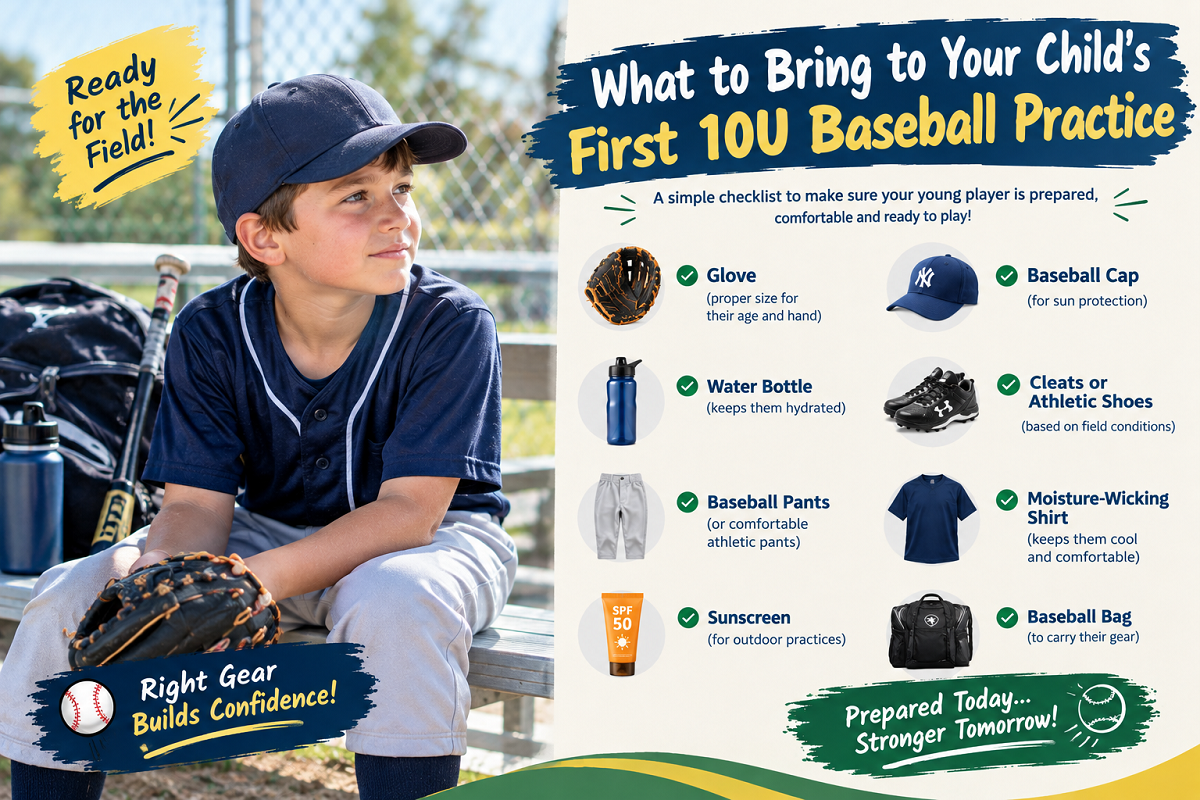
A glove that fits and is broken in properly makes fielding easier. Typical sizes at this age are roughly 11 to 12 inches for infielders and 12 to 13 inches for outfielders, with a dedicated mitt for catchers and a first base mitt for first basemen. Break the glove in by playing catch, using a small amount of conditioner, and storing it with a ball in the pocket. Do not microwave it or soak it.
Cleats, Helmet, and Protection
Choose baseball cleats that fit snugly with a little growing room. Check whether your league allows metal cleats, because rules vary by age. Always use a properly fitted, certified helmet. Catchers need full protective gear. A cup is strongly recommended for everyone, and some leagues allow batter protection such as elbow guards.
Do Not Overspend
A used glove in good shape, a tee, a net or wall, and a bucket of balls are enough to improve a lot. Spend your money on gear that fits and meets your league's rules, not on the newest model.
Tryouts, Getting Cut, and Finding Playing Time
A tryout can feel scary, but you can prepare for it the same way you prepare for a test.
How to Prepare
In the three weeks before a tryout, practice what coaches usually test: throwing accuracy, fielding ground balls and fly balls, a sprint, and hitting. Eat a real breakfast, sleep well, arrive early, and warm up properly. Know two or three positions you can play and tell the coach you are open to wherever they need you.
What Coaches Notice
Coaches watch more than skills. They notice hustle between drills, how you respond to coaching, whether you listen, and how you treat teammates. Run on and off the field, look the coach in the eye, and make routine plays cleanly. Many coaches would rather have a solid, coachable player than a flashy one who makes mistakes.
Rec, School, or Travel?
There is no single right answer. Rec ball is lower pressure and cheaper, school teams build teamwork and connect you to the high school program, and travel ball offers more games but often more expense and, in some cases, more arm risk if pitch counts are not managed. Choose the path that lets you play, learn, and rest, not just the one with the fanciest uniforms.
If You Get Cut
Being cut hurts, and it is okay to be upset. Ask the coach for specific feedback and write down two or three things to improve. Look for other teams, camps, or leagues that will give you playing time. Many successful players were cut at some point, and one tryout is not a verdict on your future.
If You Are on the Bench
Ask the coach what you can do to earn more playing time, then do it. Be the first to hustle, support your teammates, and be ready when your chance comes. Coaches remember players who stay positive.
Using Your Phone to Coach Yourself
Your phone is one of the best training tools you own. You do not need an app. You only need a stable spot, good light, and a plan.
What to Film and From Where
| Skill | Camera angle | What to look for |
|---|---|---|
| Swing | Behind the plate and from the side | Head still, hips lead, balanced finish |
| Throw | From the side and from behind the target | Front foot on line, finish across the body |
| Ground ball | From the side | Low position, glove out front, feet working |
| Pitching | Side view and behind | Balance, stride direction, follow-through |
Slow Motion Is Your Friend
Use your phone's slow-motion setting to check your swing or throw. Watch one thing at a time. Do not try to fix everything at once. Pick one change, practice it for a week, and film again.
Keep a Simple Progress Log
After every practice or game, write one thing you did well, one thing to fix, and one question for your coach. Once a month, repeat the self-test and compare results. Seeing real numbers go up keeps you motivated through slumps and growth spurts.
Eight Mistakes That Hold Players Back
Practicing Without a Target
Taking 200 swings while thinking about nothing does little. Fifty swings with one clear focus do more.
Only Practicing Strengths
It feels good to practice what you are already good at. Growth comes from the skill that feels uncomfortable.
Skipping Warm-Ups
Cold muscles perform worse and get hurt more easily. Spend 8 to 10 minutes on a jog, dynamic stretches, and gradual throwing.
Overthrowing
Throwing as hard as you can every time is a quick way to get hurt and a slow way to improve. Smooth, accurate throws build better arms over time.
Ignoring Defense and Baserunning
A player who fields well and runs the bases smartly often gets more playing time than a player who only hits.
Playing Year-Round Baseball
Current Pitch Smart guidance calls for at least four months a year off from throwing and encourages other sports. Burnout and overuse injuries are real risks of nonstop baseball.
Comparing Yourself to Bigger Teammates
Players mature at different times. Compare yourself to your own numbers from last month.
Hiding Pain
Tough does not mean ignoring injuries. Telling an adult early can keep a small problem from becoming a season-ending one.
Frequently Asked Questions
How can I get good at baseball at 13?
Practice 30 to 45 focused minutes most days, train all five skills (throwing, hitting, fielding, baserunning, and baseball IQ), measure your progress every four weeks, and rest at least one day a week. Consistency and good habits matter more than long practices.
Can I still get good at baseball at 13?
Yes. Thirteen is still early in player development. Skills, strength, and coordination continue to improve through the teen years, and many players who become strong high school players start serious training around this age.
How can I practice baseball at home alone?
Use a wall or rebounder for throwing and fielding, a tee and net for hitting, short sprints for speed, and bodyweight exercises for strength. Four 30-minute sessions a week with clear goals are enough to improve.
What should a 13-year-old baseball player work on?
Focus on accurate throwing, clean ground balls, consistent contact, smart baserunning, and baseball IQ. Your self-test will show which two areas to prioritize first.
How do I hit better at 13?
Start with a balanced setup, keep your head still, and use a tee-to-live-pitching ladder. Hit to all fields, practice calling balls and strikes during live pitching, and learn how to adjust your approach with different counts.
How do I throw harder safely?
Improve your footwork, hip rotation, and leg drive, build strength with bodyweight work, and play catch with a purpose. Do not max out every throw, avoid year-round throwing, and stop if you feel pain. Velocity tends to rise as you grow and get stronger.
What bat should a 13-year-old use in 2026?
It depends on your league. Little League and similar rec leagues generally require a USABat mark. USSSA national 14U events moved to BBCOR -3 or wood on January 1, 2026. USA Baseball 13U to 15U events allow USABat or BBCOR bats up to 34 inches. Check your league's rulebook before you buy.
How many pitches can a 13-year-old throw?
Pitch Smart sets a maximum of 95 pitches per day for ages 13 and 14, with rest days based on how many pitches you throw. For example, 21 to 35 pitches require one day of rest, and 66 or more require four. Your league may set lower limits.
Can a 13-year-old throw a curveball?
Current MLB Pitch Smart guidance says breaking pitches can begin after a player has developed a consistent fastball and changeup. Talk to your coach and parents, make sure your mechanics are solid, and stop immediately if you have elbow or forearm pain.
How long should a 13-year-old practice baseball each day?
Most players do well with 30 to 45 focused minutes on practice days, plus team practices and games. Take at least one complete rest day a week and a longer break from throwing each year.
How do I make the baseball team at 13?
Prepare for the specific tryout tasks, show hustle and a good attitude, be willing to play multiple positions, and listen to coaching. Coaches often choose coachable players over flashy ones.
What if I am small for my age?
Focus on skills you control: contact hitting, fielding, baserunning, and baseball IQ. Many players who were small at 13 grew later and had strong fundamentals ready when they did.
How do I stop being afraid of the baseball?
Use soft or training balls first, wear proper protective gear, and build gradually. Confidence comes from repeated safe success. Tell your coach about your fear so they can help you progress at a pace that feels manageable.
Is it too late to learn pitching at 13?
No. Many pitchers start later and develop well. Learn solid mechanics first, build a fastball and changeup, follow pitch count and rest rules, and take your arm seriously.
What position is best for a 13-year-old?
There is no single best position. Try several, because quick, accurate players often fit in the middle infield, fast tracking players fit in center field, and calm, tough players fit at catcher. Versatility helps you earn playing time.
Should I play travel ball or rec ball?
Choose the option that gives you playing time, good coaching, and enough rest. Travel ball can offer more competition but often more cost and more risk of overuse. Rec and school ball are excellent options too.
What should I eat before a baseball game?
Have a normal meal with carbohydrates and protein about three hours before, then a light snack such as a banana or granola bar an hour before. Drink water throughout the day and eat again after the game.
Final Thoughts and Sources
Getting good at baseball at 13 comes down to simple habits repeated for months: focused practice, honest measurement, smart rest, and a willingness to learn the whole game. The rules around bats and pitching have changed recently, so check your league's current rulebook, protect your arm, and keep playing other sports and having fun.
Start today. Do the self-test, play ten minutes of focused catch, take thirty tee swings, and write down what you learned. In twelve weeks you will be a better player than you are now.

About Premium Author
This post has been authored and published by one of our premium contributors, who are experts in their fields. They bring high-quality, well-researched content that adds significant value to our platform.
Popular Categories
Stay Connected
Recent Posts