If your child drops most throws, you are not alone, and it is rarely a sign of poor talent. Most kids who struggle to catch a baseball have one or two fixable problems: a ball that is too hard for their stage, a flinch reflex, a glove that is too big or too stiff, or eyes that are still learning to track a small fast object.
This guide helps you work out which problem your child has. Then it gives you drills, equipment fixes, and a simple plan you can start this week.
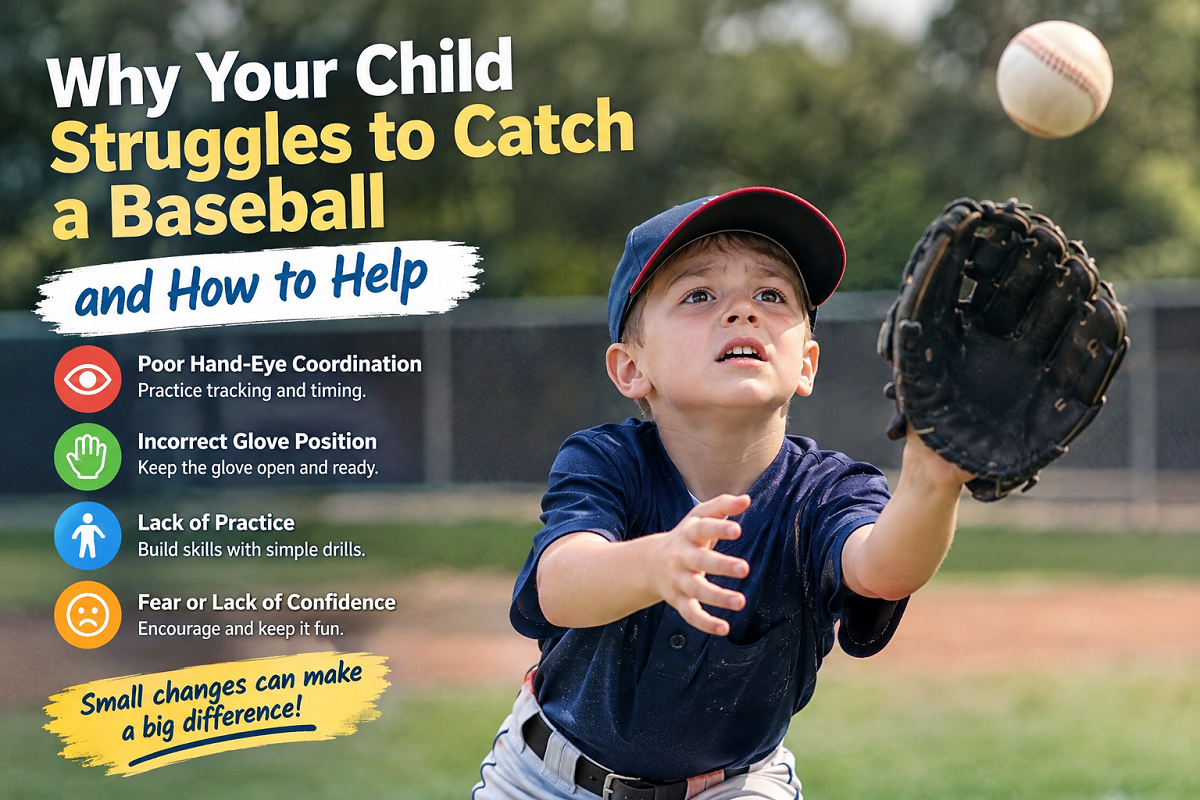
The most common reasons a child struggles to catch a baseball are listed below. Each one has a different fix, so read on before you start drilling.
A useful rule: if your child misses the ball completely, think vision, tracking, or distance judgment. If the ball hits the glove and falls out, think glove fit, hand position, and timing.
There is no single age. Catching depends on eye development, motor control, and experience, and these arrive at different speeds in different children.
The American Academy of Pediatrics notes that vision is not fully mature in toddlers and young children. They have trouble tracking a moving object and working out how fast it is coming. The AAP links this to imprecise eye movements, minor farsightedness, and incomplete development of visual areas in the brain. In other words, a 4-year-old who cannot catch is not failing. Their visual system is still catching up.
Eye-tracking research summarized by SR Research adds that smooth pursuit, the eye movement used to follow a moving object, does not reach adult levels until around age 7 or 8, and sometimes later. This is one reason many 6- and 7-year-olds improve noticeably after a year of growth and practice.
Treat these as ranges, not deadlines. They reflect typical patterns, not a test your child must pass.
| Age | What is common | Best equipment |
| 3 to 5 | Traps large, slow objects against the body. Misses most baseball-sized throws. | Scarves, balloons, beach balls, foam balls |
| 6 to 8 | Starts using the glove. Catches easy underhand tosses. Often loses fly balls. | Tennis balls or soft-core balls, light glove |
| 9 to 12 | Catches most easy throws. Works on footwork, ground balls, fly balls. | Soft-core or regulation ball, properly sized glove |
| 13 and up | Skill returns after growth spurts. Focus on speed and game reads. | Regulation ball |
If your child is under 8 and still misses most throws, the first fix is almost always a softer ball and easier tosses, not more pressure.
Most advice says watch the ball and practice more. That does not help unless you know what is going wrong. Spend one 10-minute session just watching, and match what you see to the table.
| What you see | Most likely cause | First thing to try |
| Glove closes when the ball is still far away | Poor distance and speed judgment | Slower, higher arc tosses from closer |
| Ball passes the glove or lands beside it | Tracking or positioning problem | Scarf and beach-ball drills; check vision |
| Head turns or eyes close at the last second | Fear of the ball | Soft ball, closer distance, safe-miss technique |
| Ball hits the glove and pops out | Stiff or oversized glove, late close | Check glove size and break-in; practice soft hands |
| Ball hits fingers or palm edge | Fingers pointing at the ball | Teach thumbs-up for high balls, pinkies-together for low |
| Catches throws but loses fly balls | Overhead tracking and footwork | Scarf and high-toss drills; teach first step back |
| Catches well alone, drops balls in games | Pressure or distraction | Short, game-like practice with a success target |
A second quick test: toss a few easy balls and ask your child to tell you what colour or logo they saw on the ball as it landed. If they cannot say, their eyes left the ball before the catch. Researchers who study catching in children describe the final moments before contact as the part where the eyes and hands must stay linked, which is why keeping the eyes on the ball into the glove matters so much.
If your child turns their face, shuts their eyes, or backs away as the ball arrives, the cause is almost always fear. Coaching guides for ages 5 to 8 describe this as very common: young players close their eyes, duck, or step away from balls coming at them.
Fear rarely looks like fear. Parents often read it as not paying attention. Watch for a late glove, a sideways stance, a child who catches fine with a tennis ball but not a baseball, or one who plays catch happily until the ball gets faster.
Many children flinch because no one ever taught them what to do with a ball that goes wrong. Give them a plan. Turn the body slightly to the side, tuck the chin down, and bring the glove up to shield the face. Coaches teach a similar idea to young batters, summed up as drop, tuck, turn. The point is that a child who knows how to protect themselves can afford to keep their eyes open.
Practise it deliberately with a soft ball. Toss a few bad throws on purpose and let your child practise the shield move. Then toss a good one. Alternating helps the brain learn the difference.
Confidence comes from catches that do not hurt. Drop to a ball that cannot sting: a rolled sock, a yarn ball, a foam ball, or a tennis ball. Stand close. Aim for ten easy catches in a row before you move back one step.
Youth coach Rich Randazzo, interviewed by Fatherly, makes the same first point: the first job is getting the player to stop being scared of the ball. He also suggests dropping the ball into a glove held palm up, so the child feels the ball land in the webbing with no risk at all.
Telling a scared child there is nothing to be afraid of does not work, because they know the ball can hurt. A former pro player turned instructor, writing in the Deseret News, points out that this line is not believable to a fearful player. Try something honest instead: yes, a ball can sting, it does not hurt for long, and here is how we make it hurt less.
Another simple tool from the same instructor is to ask your child before each throw where they expect the ball to go. Hearing themselves say it will land in my glove replaces the picture of it hitting them.
Some children relax with extra protection during drills, such as a face guard for ground balls. Use it as a short-term tool and take it off as comfort grows. If your child said the ball hurt through the glove, check the padding and the ball hardness before anything else.
Yes. A child cannot catch what they cannot see clearly, and kids rarely tell you their vision is off because they assume everyone sees the same way.
Catching needs eyes that follow a moving ball smoothly and work together to judge distance. A children's eye specialty page on sports and vision explains that when tracking is weak, the ball can seem to jump or vanish, which makes it nearly impossible to predict where it will land. It also notes that depth perception depends on both eyes working as a team.
Nearsightedness, farsightedness, astigmatism, lazy eye, and eye-teaming problems can all show up as dropped balls. Several are easy to correct with glasses.
A basic school screening that checks only letter chart sharpness can miss problems with eye teaming, focusing, or depth perception. Book a comprehensive pediatric eye exam and tell the doctor your child struggles to track and catch balls. That sentence helps the doctor decide what to test.
One more point: a child who is hit in the eye with a ball and then shows any change in vision needs prompt medical care, not more practice.
A small study in the European Journal of Sport Science trained 30 children over eight weeks. One group was coached to fix their gaze steadily on the target before throwing and to start tracking the ball early before catching. Both a short-term and a six-week test showed the trained group had better eye behaviour and better catching than the group given standard instruction. The practical takeaway for parents is modest but useful: teach your child to find the ball the instant it leaves the thrower's hand, and to look at the target before they throw.
Be careful with products that promise to train vision with screens or gadgets. The evidence that general eye-training games transfer to real catching is thin. A proper exam plus real catches is the more reliable route.
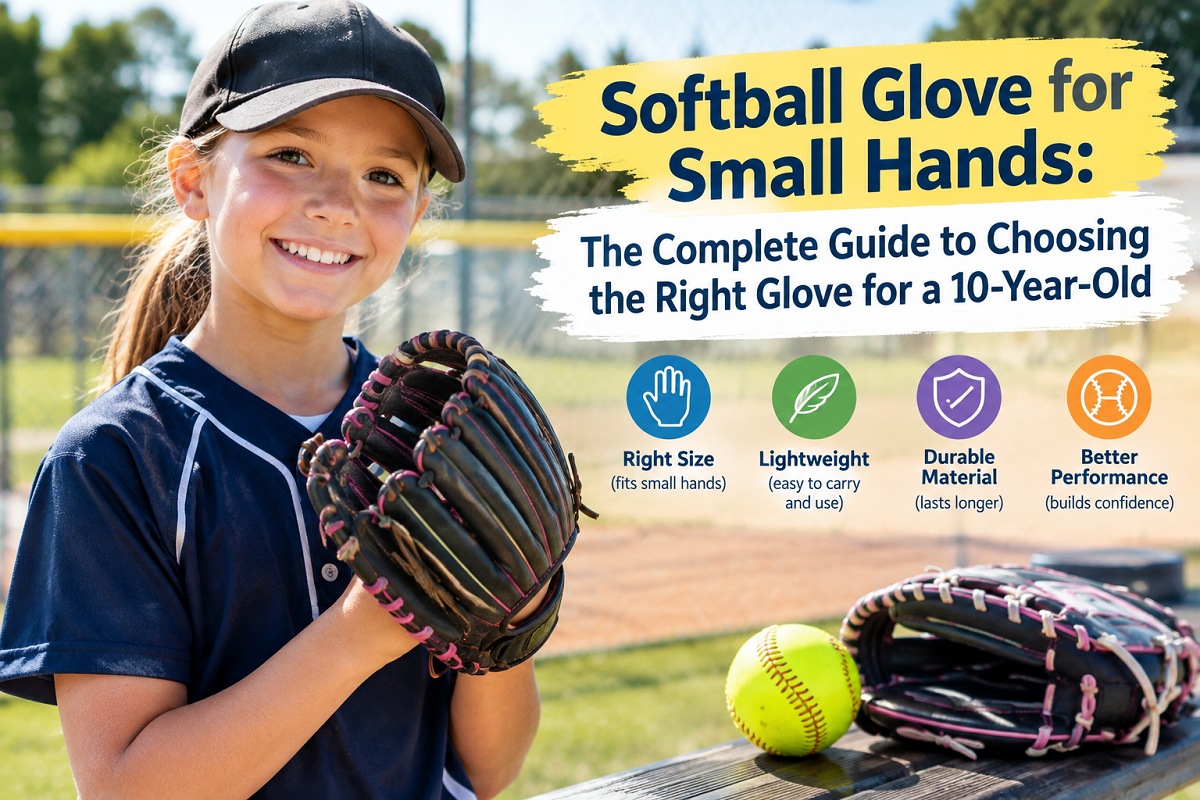
In many cases a poor glove is behind a child's dropped balls. A glove that is too big flops open and sits wrongly on the hand. A stiff new glove will not close, so the ball bounces off the leather.
Sports retailers publish general size charts, and the ranges below come from one commonly used chart. Treat them as a starting point. Hand size matters more than age, and a child who struggles with catching is usually better off at the smaller end of the range.
| Player | Age | Typical glove size |
| T-ball, all positions | 3 to 6 | 8.5 to 10 inches |
| Youth infield | 7 to 12 | 10.25 to 11.5 inches |
| Youth first base | 7 to 12 | 11.5 to 12 inches |
| Youth outfield | 7 to 12 | 11.5 to 12.25 inches |
Notice how wide the youth range is. A small 7-year-old should not wear the glove sized for a tall 12-year-old, and buying to grow into is a common mistake.
With the glove on, your child should be able to open and close it with one hand without pushing it shut against their body. If they cannot, the glove is too stiff or too big for now.
Most youth gloves come fairly ready to use, which means heavy oiling is usually not needed. Work the pocket, flex the fingers, and play lots of catch with a soft ball. Too much oil can make leather heavy and floppy, which defeats the purpose.
A glove goes on the non-throwing hand. A right-handed thrower wears a glove on the left hand. If your child throws with one hand but is wearing the wrong glove, catching will feel awkward. Some children who write with one hand throw with the other, so ask which hand they naturally throw with rather than assuming.
Starting with a regulation baseball is like learning to swim in the deep end. The ball should match your child's stage, and you move up only when they are relaxed.
| Stage | Ball | Why it helps |
| 1 | Scarf, balloon, beach ball | Slow flight gives the eyes time to learn tracking |
| 2 | Yarn ball or foam ball | Baseball-sized, but harmless |
| 3 | Tennis ball | Bouncy and forgiving, and a common choice in youth coaching programs |
| 4 | Soft-core or reduced-impact baseball | Real size and weight feel with less sting |
| 5 | Regulation baseball | Only when ten easy catches in a row come without flinching |
Avoid skipping stages to keep up with teammates. A child who spends a few extra weeks on tennis balls usually catches up faster than one who is rushed and learns to flinch.
Teach one cue per session. Children cannot fix feet, hands, eyes, and attitude all at once.
According to Randazzo, the easiest place for a child to catch is just above the head on the glove side, where the mitt barely has to move. Show your child that spot, then toss easy arcing throws to it from a few steps away. Because the ball comes down with arc, it also trains the pop-fly path.
Feet about shoulder-width apart, knees slightly bent, weight on the balls of the feet, both hands up in front. A child standing flat with arms down has to travel farther to reach the ball.
Tracking time matters. Ask the thrower to hold the ball up for a moment before throwing, so your child locks onto it early. This lines up with the catching study above, where early tracking was part of what helped.
Above the waist, point fingers up with thumbs close together. Below the waist, point fingers down with pinkies together. Pointing fingers at the ball is a common beginner error that causes jams and bounces. A short chant helps: thumbs together up high, pinkies together down low.
The bare hand comes up beside the glove like a lid. It does not reach for the ball. It covers it once it lands, which also prepares the child for a quick throw.
Stiff arms make the ball bounce out. Teach your child to let the glove give a little toward the belly button on contact, like catching an egg.
The final cue is to watch the ball into the glove. Practise by asking your child to call out the logo or colour as the ball lands.
Move up a stage only when the previous one feels easy. Success counts matter more than distance.
Toss a large, thin scarf into the air and let your child catch it with a glove or both hands. The slow fall gives the eyes plenty of time. Then move to a beach ball. Coaches who teach fly balls to tee-ball players use the scarf as their first step, and it works just as well at home.
Have your child hold the glove palm up. Drop the ball into it from a short height so they feel the pocket and the sound. Repeat until it feels boring. Boring is the goal.
Coaching programs for young players start with catches at arm's length, then move to throws between the shoulders, then overhead. Use tennis balls. Keep your throws gentle and underhand, from 8 to 10 feet.
Back up one step at a time. Add throws slightly to the left and right, then slightly higher and lower. Keep a target of ten catches in a row before moving back.
Switch to a soft-core ball once your child shows steady success, and only then to a regulation baseball. Start at about 10 feet again.
Five minutes a day adds up quickly because it multiplies the number of quality catches.
Ground balls need a different approach. Teach your child to get low, keep the glove on the ground between the feet, and let the ball come to the body. Bad hops usually come from standing tall. If your child keeps getting hit by hops, lower the body before adding speed.
Many kids who catch throws well still lose every pop fly. That is normal. A ball coming straight down at you looks like it barely moves until the last moment, and the glove has to be in place before the ball seems to get close.
Coach Belmont's six-step method, shared by Fatherly, begins with the scarf for the youngest players. Next come soft tosses and once-bounced balls, then real thrown fly balls, then catching on the move. The ordering is the point: tracking first, running second.
When teaching, toss the ball by hand instead of hitting it with a bat. You control the height, speed, and landing spot, and you can place it exactly where your child needs practice. Switch to a bat only once your child catches tosses reliably.
The most useful outfield habit for beginners is a small first step back. A fielder who steps back and then comes in has a much easier job than one who runs in and has the ball sail over their head. Coaching guides summarize the footwork as drop step, crossover, go. On contact, step back with the foot on the side the ball is heading. Read its flight. Then cross over and run if it is far.
A simple rule to teach: it is easier to run forward onto a ball than to turn and chase one over your head.
Teach your child to yell mine or I got it before the catch. It prevents collisions and forces a commitment. When your child is standing still under the ball, catch it with two hands. Coaches often teach a catch-and-clasp motion. On the run, a one-handed catch is more realistic.
Once the basics are steady, try a drill where your child starts with their back to you or lying on their stomach. You shout go, toss the ball up, and they pop up to find and catch it. If your child can find a ball they did not see leave your hand, a normal fly ball becomes much easier.
Practise in different light too. Sun glare is a quiet reason many children lose fly balls. A hat with a brim, sunglasses for daytime practice, and teaching the glove-shade habit can all help.
Short and regular beats long and tearful. Aim for three or four sessions a week.
Always end on a success, even if you have to make the last throw easier.
Write down each session's best run of consecutive catches. Seeing the number rise is motivating, and it tells you whether the plan works. If the number stays flat for three weeks, go back to the diagnosis table and recheck fear, glove, and vision.
Most children improve with a softer ball, a better glove, and regular short practice. A few signs suggest it is worth getting advice.
Your child squints, tilts the head, complains of headaches, misjudges distances, or stays stuck despite several weeks of soft-ball practice. Ask for a comprehensive pediatric exam that checks eye teaming and depth perception.
Your child is clumsy in many areas, such as stairs, buttons, handwriting, or running, not just catching. Developmental coordination disorder is a motor learning difference that affects age-appropriate movement skills. A published study on boys with the condition found that their catching difficulties reflect a mix of problems attending to visual information and organizing the movement. That is a reason to get a proper assessment, not a reason to panic. Therapy can help.
Your child has no concerns beyond catching and wants structured feedback. Look for a patient coach who uses soft balls with beginners and gives one cue at a time.
If your child says I am bad at sports or refuses to practice, ease off. A lighter, shorter, more playful routine usually brings the motivation back quicker than pushing.
Speed before skill builds fear. Slow down and let your child ask for faster throws.
It sounds helpful, but children rarely know what to do with it. Use specific cues: watch it into the glove, or tell me the logo.
Pick one cue per session. If it sticks, add another next time.
Fumbling in front of teammates makes fear worse. Build the skill at home first.
Compare your child only with their own results from last week. Comparisons with siblings or teammates damage motivation.
If the ball stings through the glove, listen. Check the padding and the ball hardness before asking your child to toughen up.
A tennis ball is softer, lighter, and less frightening, so the child relaxes and keeps their eyes open. A baseball is smaller and harder, which makes tracking more demanding and flinching more likely. Move through soft-core balls before returning to a regulation baseball.
It is a protective reflex, usually from fear of being hit. Switch to a softer ball, shorten the distance, and teach a safe way to miss. Most children stop closing their eyes once they have enough painless catches.
Yes. The AAP explains that young children's vision is still developing, and tracking a moving object and judging its speed are hard at this age. Use large, slow, soft objects, and expect improvement over the next year or two.
Many children can catch an easy underhand toss with a glove somewhere between ages 6 and 9, with big individual differences. Fly balls usually take longer. Use age as a rough guide, not a deadline.
Yes. Nearsightedness, farsightedness, astigmatism, lazy eye, and eye-teaming problems can all affect tracking and depth perception. A comprehensive pediatric eye exam is a sensible step if progress stalls.
Check the glove first. A stiff or oversized glove is a common culprit. Then look at technique: fingers pointing at the ball, stiff arms, closing late, or eyes leaving the ball just before contact.
Use a properly sized glove, start with easy arcing tosses to the spot just above the head on the glove side, point the fingers up for high balls and down for low ones, bring the bare hand up as a lid, and let the glove give on contact.
One common retailer chart lists 8.5 to 10 inches for ages 3 to 6, and 10.25 to 11.5 inches for youth infielders aged 7 to 12. Outfield gloves run larger. Choose by hand size and ease of closing, and favour the smaller end for a beginner.
Start with scarves, move to soft tosses by hand, and add a first step back. Teach drop step, crossover, go, a loud call of mine, and two hands when standing still. Toss rather than hit until your child is reliable.
Ten to fifteen minutes, three or four days a week, is enough. Short sessions that end on a success keep motivation high.
Use a ball that does not hurt, teach a safe way to miss, let your child control the distance and speed, and ask them where they expect the ball to land before each throw. Avoid telling them there is nothing to fear.
Yes, if they enjoy it. Many leagues use tee-ball and softer balls for the youngest players for this very reason. Practising at home with the right ball and glove usually helps a child catch up.
When a child struggles to catch a baseball, the cause is rarely a lack of talent. It is usually fear, equipment, young eyes, or too few comfortable catches. Start by watching how your child misses, then fix the glove, the ball, and the fear before you add speed. Short, patient sessions that end on a win do more than long, stressful ones. If progress stalls despite that, an eye exam is a quick and inexpensive next step.

This post has been authored and published by one of our premium contributors, who are experts in their fields. They bring high-quality, well-researched content that adds significant value to our platform.